Monkey, poetry, and faith in love
Clare Shaw
‘Every poem, every piece of art or music, is an act of human community. Every book is an act of faith, every song is a form of love…’
Hello again friends. For New Year’s Day, I’m glad to send you this short post from the Yorkshire poet Clare Shaw, who has kindly allowed me to republish it here.
Clare first offered this post as a spoken reflection in November at Somerville College Chapel, Oxford, on the theme ‘Ways of loving’. I was bowled over by the way they brought love and hope together in the same experience, without turning away from the world as it is. I hope you enjoy Clare’s words as much as we did.
It’s a seven-minute read.
On Christmas Day 2015, we went to sleep to the sound of heavy rain. On Boxing Day, we woke to the guttural wail of the flood siren.
I went out in my pyjamas to check on a friend who lives by the river – and I watched as the water bulged and broke over its banks and through the poured town. Within an hour, I was wading through thigh-high water.
Over recent weeks, we’ve seen the damage a flood can do. In my little town of Hebden Bridge, nobody died, but over 1,200 homes and businesses were ruined.
At the time, I was finishing my third poetry collection – Flood. This was no coincidence. The Calder Valley is steep-sided, topped with miles of wide, wild moor. When heavy rain comes, those expanses (especially when managed by grouse-shooting, heather-burning landowners) drain into the rivers and the valley bottoms are inundated. The next major flooding of the Calder Valley came just three weeks before lockdown: not a great year.
And yet.
We continue to live there, with Hebden just one of its thriving little towns. The story of the floods is a story of destruction, but it’s also a story of how communities come together to save and recover swiftly, kindly, generously. I guess you could say this was also true of Covid – when we found how far we would go to protect each other, and when we realised how much we missed and needed each other.
I’m fascinated by that. And by the story of psychologist Harry Harlowe, who, in the 1950s and 1960s, created a scientific evidence base for the importance of affection and touch through an infamous series of experiments. Baby rhesus monkeys were taken from their mothers at birth: some of the babies were denied all touch and contact; some died. Some were placed with fake mothers: one made of soft cloth, the other of wire. Scientists watched as the babies clung to the soft cloth mother – despite the fact that the wire mother had the milk – and concluded proof that we need affection and touch – love – as much, if not more, than we need food.
We knew that already, of course. Our first act as human beings is to cry – we’re utterly vulnerable, utterly dependant on other people to care for us. We cry because we need other people.
We need other people. I want to tell you that I love you. I just totally love you. I love you. Please tell my children that I love them very much. I hope to see your face again, baby. I love you. Tell the boys I love them. I just want you to know I absolutely love you. If you don’t recognise them, these are some of the final messages sent in the final minutes of the Twin Towers. No matter how painful or disastrous or hate-filled the circumstances, human connection – love – is our primary need.
I came to adulthood in a community which knew this only too well. In the Eighties, being openly gay could mean losing your family, your community, your job. You were likely to face violence. You would certainly face judgement and exclusion, and be denied rights and protections your straight friends took for granted. In my poem Vow, written in 2013 to mark the fact that gay people could now marry, I wrote “love must, at all costs, be answered.” That’s the way it felt. But the hostility I experienced, alongside the other difficulties I’d faced in my childhood, took its toll.
I was a student when I first needed psychiatric treatment; I spent my early twenties in and out of psychiatric wards, day centres and emergency departments. By my thirties, I was working in the same places as a staff trainer and researcher. During those times, I met people who had survived the very worst traumas and abuses that you would hope never to imagine, often at the hands of the people who should have cared for them. I am still amazed not just by their survival and recovery, but also by their determination to love. It seemed remarkable that people who have been so hurt would continue to seek out companionship, friendship and love, who would often want nothing more from life than to love and be loved.
That’s why, in writing my fourth collection, Towards a General Theory of Love, I created the figure of Monkey – a small, broken and wise survivor of Harlowe’s experiments. Monkey walked besides me for a while; he taught me how to get through lockdown and its loneliness, and gave me a way to understand my own drive to love despite the violence and despair I’d experienced in my earlier life.
In her poem “Small Acts of Kindness,” Danusha Lameris writes:
Mostly, we don’t want to harm each other.
We want to be handed our cup of coffee hot,
and to say thank you to the person handing it. To smile
at them and for them to smile back.
Put that way, we can conceive of ourselves as surrounded by kindness and love. But how can smiling at a stranger weigh up against genocide, or the enormity of grief, or the legacy of childhood trauma? Sometimes, it can feel like despair or overwhelm – or complete disengagement – are the only proportionate responses.
It’s my hope that poetry, and art, and faith can help us to hold the reality that yes, we are built to love, and yes, we do each other terrible harm. I hope that they can continue to help us to engage with all of our realities – love and horror, and the whole world of humdrum details and feelings in between. We need to hold both those realities alongside each other to keep our sense of agency – and our hope.
On the day I delivered this article as a speech in Somerville College, Mosab Abu Toha shared the news that 70 people had been killed that night in an air strike on a house in Beit Lahia. He’s also the author of this short poem:
A Rose Shoulders Up
Don’t ever be surprised
to see a rose shoulder up
among the ruins of the house:
This is how we survived.
Mosab Abu Toha writes because he believes that somewhere, someone will translate those marks on a page into thoughts and feelings that they will take into their own body and absorb into their own lives. Every poem, every piece of art or music, is an act of human community. Every book is an act of faith, every song is a form of love.
And what about Monkey? The babies subjected to Harlowe’s hideous and flawed experiments were, inevitably, deeply traumatised — fearful and withdrawn, unable to socialise, rocking and hurting themselves. The impact of their prolonged isolation was, in Harlowe’s own words, “devastating and debilitating” – a legacy which he initially concluded was “irreversible”. But later experiments found that even the most devastated monkeys could, as a result of time spent with younger monkeys, be eased back into social contact, and into recovery.
Perhaps you could say that Harlowe teaches us about cruelty, and the monkeys teach us about love. Monkey was the metaphor I chose for my hunger for love; for my difficult journey towards a stable, loving relationship and healthy friendships. He embodied the ways we try to recover, the ways we are driven by love.
When we stand in the ruins, it is okay to turn towards love and kindness. It is okay to look for light and roses. We need light to see the ruins. We need roses to bear the ruins. And even in the ruins, there are roses, everywhere.
about the author
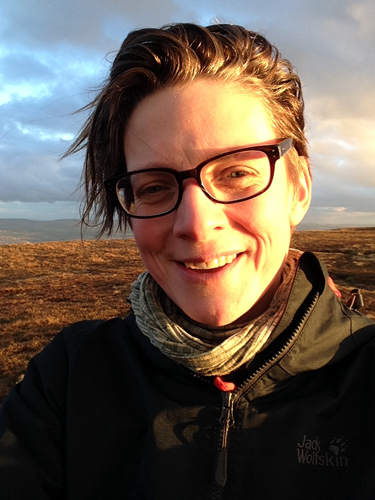
Clare’s four poetry collections are published by Bloodaxe.
Their most recent, Towards a General Theory of Love (2022), explores how love and its absence shapes our lives. The collection won a Northern Writer’s Award, and was a Poetry Society Book of the Year.
Clare works with a wide range of organisations, including schools, to share a passion for the power of language.
You can support Clare’s work and read more of their writing by subscribing to their Substack or ordering one of their books.
Meanwhile…
I’ve added a couple of short blog posts to my personal blog at slumgullion.blog.
Thanks
To Arzhia Habibi for the banner artwork

