Thank you to the many readers who’ve sent kindness my way since I wrote about my cancer last time. I’ve added a short update to the end of this post.
This time, with the election coming up, I’m back to pondering a politics of hope.
This is the fifth post in a series proposing that a humane practice of political hope may be found in a few cardinal commitments of character, community, and culture, which shape the ways we relate to our world.
The series has explored two of these commitments so far: care and thoughtfulness. This post looks at a third, which I’m calling bearing .
It’s a 13-minute read.
bearing (noun).
- 1. the way a person holds themselves, their character.
- 2. the carrying of something, usually of value.
- 3. a direction taken from a fixed point.
It’s the day of the election announcement. While the TV livestream waits for the prime minister to come out and tell us, his lectern in the street is moved to the right, then left, then right again. The camera tracks it side to side, swimming in and out of focus, while a pundit explains that an election is the moment that power is handed from the politicians to the people.
Is it?
Pelted by the rain, the prime minister congratulates himself on his record and asks to stay on to fix all the problems. The bit about the opposition lacking all conviction is drowned by amped-up protesters in Whitehall blasting a musical memory up the street: Things can only get better.
Can they?
Because something is rotten in the state of our democracy. Beyond the bubble of true believers — mostly elites of various kinds — voices of disaffection are sounding from every corner. For these discontents, next month’s general election will feel less the timely assertion of citizen power than their quinquennial reminder of just how far the future has been dragged away from them.
I’ve long felt the same alienation. Our ‘democracy’, in inverted commas, is the sea I’ve sailed on as an activist for 30 years or so. My time in and out of parliament has yet to shake my early prejudice that its main motive force is an anxious attachment to power disguised by the equally anxious triangulation of appearances. The good-faith will to do the ‘right thing’, however understood, is at work there too, but politicians have grown more afraid of it. I’ve watched those with the courage to face the weather get pushed to the shallows, while those who chase the prevailing wind are awarded responsibilities beyond their virtues. We’ve been left with leaders who promise deliverance without cost, a seductive lie that many in our strained society want to hear.
Westminster natives widely disparage as naïve, even quaint, the suggestion that democracy sinks or swims by the quality of care and thoughtfulness we bring to it. The idea that a society can find its bearing in a shared, if contested, fidelity to the common good is dismissed as a liberal fairytale. Such a hope may well feel remote, but can we really do without it? I want to wonder here why it may be on the slide, and what it might take to recover it.
‘Spectocracy’
I don’t want to dwell long on the many shortcomings of our own ‘captured’ system: our voting system is unfair, our parliament corrupted by nepotism, and most of our ‘free’ press twisted to the interests of a financial elite. These facts alone ought to trouble the rather facile view that elections hand power back to the people. But even were all its warts washed away, our democracy would still be lumbered with its basic moral vulnerability: its trust in us, the public crowd, to make collective choices that do not lead to mass harm.
It’s a faith so bold that varied voices condemn it reckless, from anarchists at the fringes of power to privileged libertarians close to its heart. Can we tell a hard truth from a seductive lie? Do we even care? Democracy’s critics need only point to the powerhouse of contradictions that is Donald Trump, or the surge of Europe’s far-right promising cheap salvation by violent means, for evidence of the public will on the rampage. With reason, they ask why today’s representative democracies are tilting to strongman autocrats to bludgeon their problems away.
Around the so-called ‘centre ground’, too, our democracy merges with the power of performative spectacle – let’s call it spectocracy. I’m drafting this on the night of the first two-piece TV election debate, a glitzy show of democratic theatre played out like a boxing bout. Two men in suits swung haymakers at each other while a ringside chorus of the billionaire-owned press jostled to declare a winner – one man had been ‘on the ropes’ on tax, the other was ‘desperately lashing out’ with lies.
I’ve been wondering how the spectacle looks from a distance, particularly in China, whose political aristocracy has long invested in the view that Western democracy is a well-marketed sham. Away from the predictable propaganda of China’s apparatchiks, one author seems to me particularly thoughtful — the academic Bai Tongdong. His problem with our system boils down to a simple, well-placed challenge. We lack the collective ‘intellectual and moral competence’ to make choices of consequence, says Bai, and so our politics has fallen in thrall to that most dangerous of spectres, ‘blind popular will’.
Bai thinks we can still save ourselves. We just need to give more authority to a chosen few with the wherewithal to use power well. I really think this idea has something to it. I think of some indigenous cultures that expect their leaders to have earned the authority of eldership before they practise it. But in place of the academic schooling that Bai privileges, what makes an elder an elder is the sagacity of lifelong learning. It’s the seasoning of an individual’s character over time — and their community and its culture over generations — that enables true elders to face the dilemmas of leadership with the maturity they require.
Unfortunately, at the unwieldy scale of the nation state, such ideals falter as readily as democracy’s. The self-styled meritocracy of Bai’s China offers a warning. As the climate emergency looms, the country churns out more carbon than any other and is opening the most coal mines. By coincidence, today, 4 June, is the anniversary of the Tiananmen Square massacre, which the government has strained every sinew to erase from national memory. 35 years on, public dissent is still crushed with indifference, minorities are hounded. China’s record is a byword for the harm that follows when authority is left to a political class that presumes to deserve it.
We’re better off, it seems, stuck with the mess of our democracy. All told, its harms have been just as prodigious, but at least the mess is ours.
Capable
For my own part, this is where I choose to be stuck. Democracy’s mortal weakness, its trust in the crowd, is also where this anarchist finds its essential vitality. We may not be very good at it, but nothing in my own experience suggests that we’re incapable. Away from the empty avarice of our economic elites, daily life for most of us is guided by the characteristically democratic impulse to balance our own needs with others’. Our many almost-unconscious, everyday practices of cooperation and accommodation draw far closer to a social norm than the cynical commonplace that each of us is here for me, myself and I. I’ll wager, too, that most of us believe that how we share power, hold it, and put it to work in our world, ought at least to be fair.
Even as children, most of us experience a natural impulse of care for the world around us, which must be among the most profoundly promising gifts of hope that our societies are ever given. We might better support children to cultivate their natural attentiveness and navigate the dilemmas and difficulties of bringing it into their choices.
For instance, our years in education can be as Hannah Arendt hoped, ‘the point at which we decide whether we love the world enough to assume responsibility for it’. Unfortunately, few young people experience it that way. Many schools expect civic responsibility to spring from a diagram about the voting system and a story about the suffragettes, which leaves young people underprepared for the political choices that await them. I take heart from those teachers who support their learners to discern what they care about and why, to act on it, and to share and learn from one another — and to trust and believe in themselves. Young people may then move into adulthood carrying conscious hopes for their society, and better able to fend off the cheap guile of a barking headline, showboat politician, or viral deepfake.
In common
If we want our democracy to thrive or even survive, then learning its gifts and disciplines must begin from an early age, but the cultivation of good individual democrats can only carry us so far. As with all good things, it takes a community to hold our democratic sensibility in common, and it takes a rooted culture — the stories we live by — to remind us of it. Since both are now diluted in our technologically overclocked world, many of us turn to social movements and solidarity groups to find a home where care and thoughtfulness matter. These many small ‘republics of hope’ do some heavy lifting for us all, but I wish that the same commitments mattered more in the places most of us live, away from the activist bubble.
Sometimes, they do. I’ve been hearing more about the Grenfell community lately. After the night of the fire – caused by the elite greed that our democracy continues to bless – Grenfell’s mixed-background community has grown in common solidarity. This is because shared trauma drew them together, I’m told, though also because they were already a community before it struck. In time, their shared feeling for what matters as a community has grown clearer and stronger, giving them their bearing, in all senses of that word, as they struggle for justice. Their example suggests to me that what enables us to think and act democratically is less ‘intellectual and moral’ privilege than communities and cultures that haven’t forgotten what they care about.
I’m reminded in turn of James Baldwin’s prophetic affirmation that Black Americans wouldn’t stray far from what mattered because blues at the juke joint and gospel at church would remind them every week. Unlike the white social order, Baldwin’s America during the civil rights movement was living a shared story that bound where they’d come from to where they were heading. And that meant they were harder to con. They didn’t need a politics degree to see Jim Crow and the Vietnam War for what they were or to take their convictions to the streets and eventually the ballot box.
Such a politics of soul and story may be in retreat as Western spectocracy reproduces itself every four or five years and subdues our deeper cares to dormancy. Our fractious societies are all sail and little rudder – full of urgency but in want of bearing – and buffeted on either side by the outraged squalls of media barons and the siren charms of YouTube conspiracy theories. Amid all the ideological heaving over what ought to be right, the question of bearing — what ought to matter — gets lost. Yet the question still asks itself in us, and for as long as it does, the possibility of real democracy has yet to slip from reach.
But the seas are rising, the weather needs facing, and we’re drifting.
Leeboard
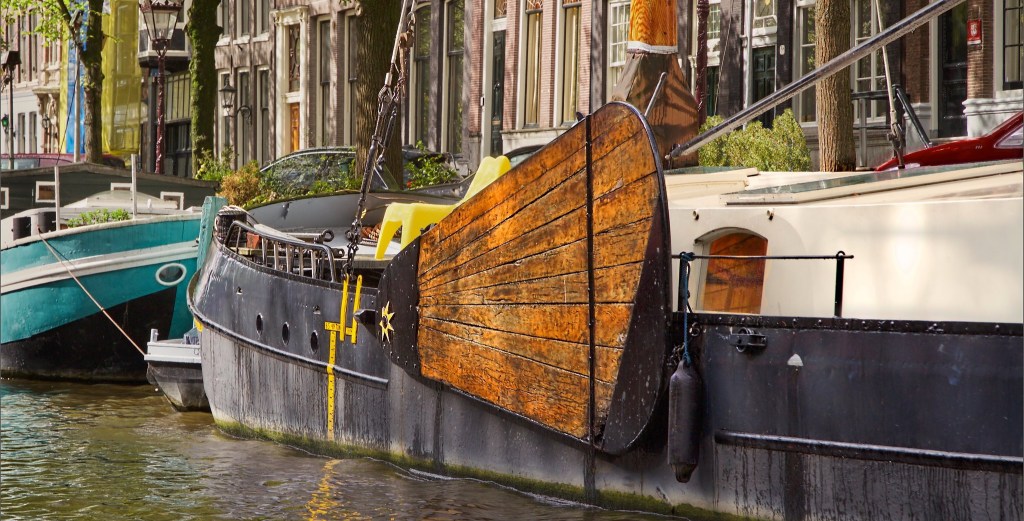
In China’s Tang dynasty, shipwrights learnt to check leeward drift to hold a ship’s course. They used leeboards, large leaves of hardwood hung from the gunwales that could be plunged into the sea when sailing upwind. In the year 759, a writer, Li Ch’üan observed that the boards ‘held the ships, so that even when the wind and wave arise in fury, they are neither driven sideways, nor overturn’. 800 years later, imperial traders brought the invention to Europe, and today on the Thames where I live, these elegant planks of oak are still seen hitched up against the flanks of the older Dutch sailing barges.
The leeboard that can keep our politics from being driven sideways is not, I think, the correct clutch of ideas or beliefs, but what has counted for us in forming them. Above all stands the question of whom we mean our politics to be for. Is it for me, you, us? For the masses of unknown ‘othered’, the not-yet born, the earth entire? Do the mounting stresses on our societies demand that one tribe scramble to dominance just to survive? Or do the same pressures urge the opposite: a slow, stubbornly windward-facing vow to remember, through our politics, all the disowned fragments of our common body?
This is the kind of political leeboard that I, for one, want to hear plashing the waves in an election debate. I’m weary of weaponised facts and rhetorical decoys, TV audiences waiting for the direct hit, and the wide berth around words of care as if they’re mined, like peace, rights, solidarity, justice. I’m done with manipulations like ‘It is right that…’ and ‘What working families want is…’ I want to hear a candidate for power acknowledge that the times to come will be hard. I want them to say what they believe to be at stake and then state honestly, when weighing the inevitable dilemmas, what they most care about. I don’t want to be told our future depends on growing the economy, I want to hear what kind of society we might yet grow into.
De-vote
I’m in the unusual position of knowing that the coming election is likely to be my last. The MP in my middle-England hometown enjoys a ‘safe seat’, meaning safe from democratic dissent. Wherever I might pin the tail on the donkey — hard left, far right, or monster raving loony — the same millionaire gets returned to office every time. I might as well fold my ballot into a paper crane and pencil my one last allotted kiss on its brow. X.
So I shall cast my vote in another way.
The root of the word ‘vote’ means something like ‘to give oneself to’, which is why it pops up in the word ‘devote’. When I think of every committed community like Grenfell’s, every teacher who invests in the political agency of young people, and of the hidden, humane politics in every everyday act of thoughtful care or careful thought, it’s their devotion that springs democracy from its inverted commas and lifts it from the page. Let these have my last X. It’s in their persistence, in the long years between polling days, that real democracy is on the move, holding its bearing, sails filling, leeboards down.
Health update
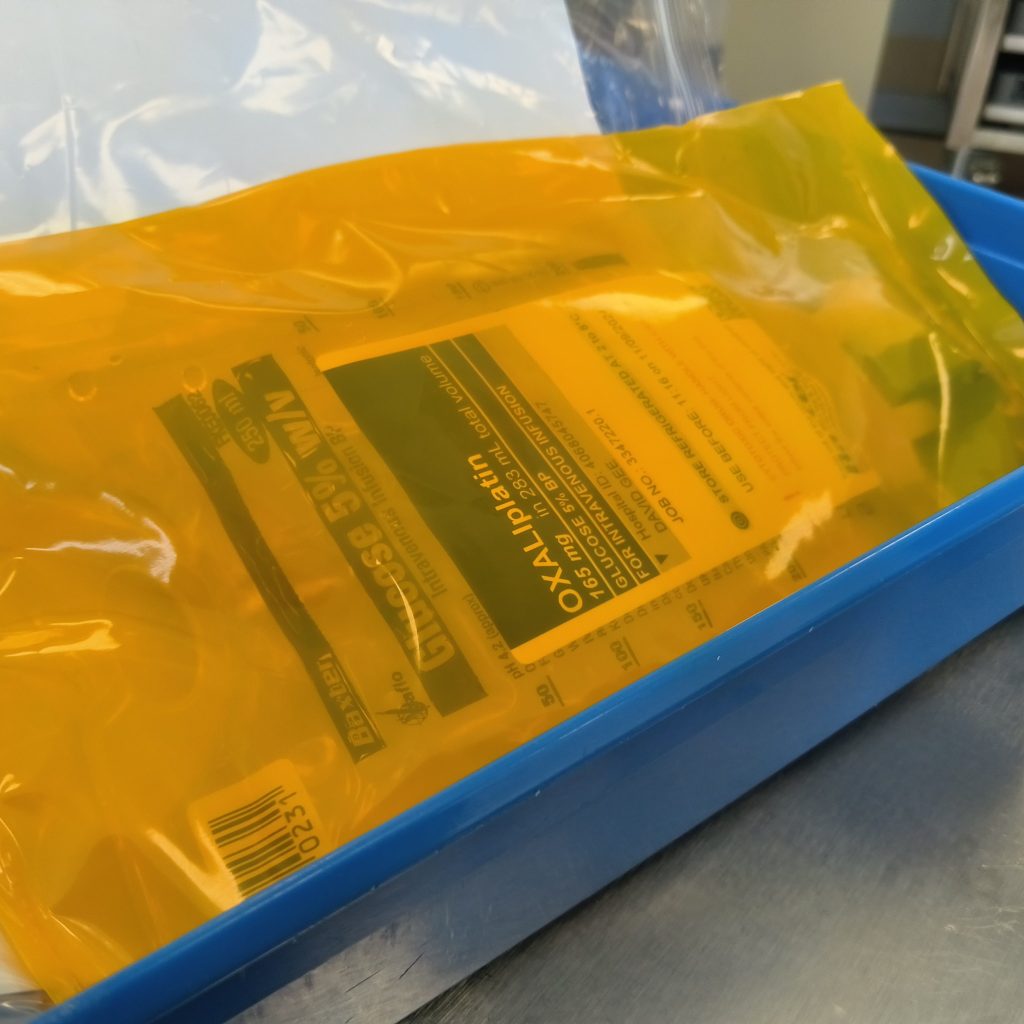
I’ve been on the receiving end of a whole lot of love these last few weeks, thanks to so many warm messages, visits, and practical help with this and that. I feel deeply thankful to be so well held. I feel inspired, too, to witness the grace of care and thoughtfulness in my friends and indeed strangers also — it gives me hope for our world. If you’ve been in touch and haven’t heard from me yet, you will — it’s just taking me a while.
I’d also like you to know that, since I wrote about my physical discomfort as the cancer spread, this has left me alone for now. Chemotherapy dumps me in a swamp for a few days every fortnight, which I find unpleasant and quite weird, but I’m no longer ‘cramped to a stoop’, as I wrote last time. At some point, no one knows when, the treatment is expected to stop working, but for the time being I’m able to enjoy each day.
Thanks
To Ersilia Verlingheiri and Jane and Simon Fisher for comments on an earlier draft, and to Irwin Reynolds for allowing me to use his fine photo of a leeboard on a sailing barge in Amsterdam.
Other sources
As well as the linked sources, I’ve drawn on the following.
- My source for the origin of leeboards is R Temple, China: 3,000 years of science, discovery, and invention (London: Prion, 1991), pp. 188-189. This brilliantly written survey of Chinese ingenuity through the ages will leave any reader wondering whether anything we rely on in the west was not, just like all our gadgets today, first made in the east.
- For more on encouraging political agency in the school system, see Quaker Peace & Social Witness, Peace at the heart: A relational approach to education in British schools, 2022.
- A thoughtful Q&A with Bai Tongdong is on the YouTube channel of the Asia Society of Switzerland.
- Hannah Arendt is quoted from ‘The crisis in education’ in Between past and future (London: Penguin, 2006), p. 193.
- James Baldwin’s characterisation of Black America is discussed in depth in James Cone, The Cross and the lynching tree (Maryknoll, NY: Orbis, 2011).
 Hope's work